
When discussing microphone placement techniques that offer pristine audio capture, the Decca Tree configuration often stands out. Initially developed for orchestral recordings, this method has found applications far beyond the concert hall, proving its adaptability and effectiveness in diverse audio scenarios.
The Origin Story
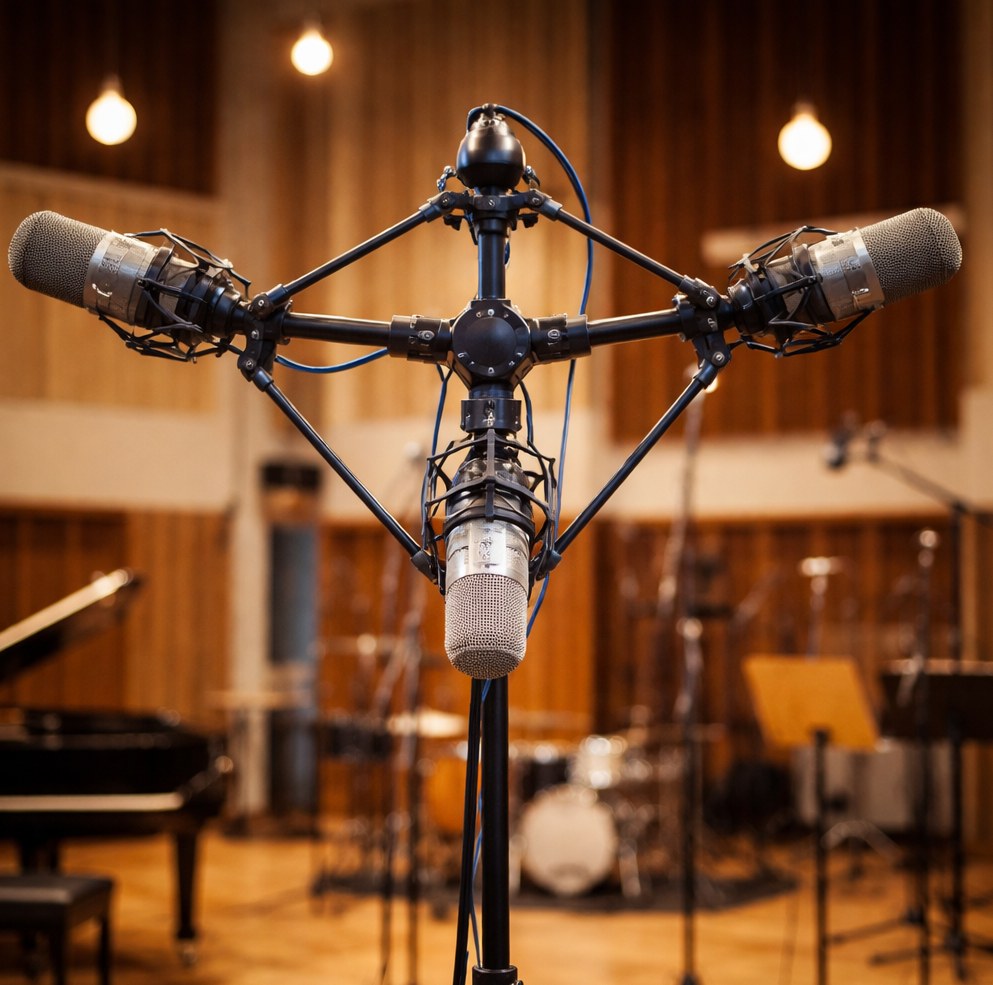
The Decca Tree was born from the pursuit of capturing the grand acoustics of orchestras. Developed by Decca Records in the 1950s, it was designed to provide a three-dimensional sound experience. The arrangement consists of three omnidirectional microphones, usually placed on a T-shaped bar above and slightly behind the conductor. This setup helps capture both the direct sound and the ambient reflections, offering a rich and immersive stereo image.
Why It Works
At its core, the Decca Tree’s success lies in its ability to balance sound directness with ambient space. By strategically placing three microphones, it captures a precise stereo image while maintaining the depth and warmth of a live performance. The front microphones (the “main pair”) handle the left and right stereo channels, while the center mic fills in gaps, offering a fuller, more complete sound.
The Setup Process
Setting up a Decca Tree requires attention to detail and a clear understanding of the desired sound profile. Typically, the microphones are spaced around one to two meters apart, with the central mic slightly forward. This setup helps create the desired balance between direct sound capture and ambient noise, making it suitable not only for orchestral recordings but also for film scores and live concerts.
Diverse Applications
While its roots are in classical recordings, the Decca Tree has transcended its initial purpose. Its adaptability makes it an excellent choice for capturing choirs, large ensembles, or even jazz bands. In film scoring, the technique brings out the rich textures of an orchestral soundtrack, creating an immersive audio experience for cinema audiences.
Beyond music, the Decca Tree finds its place in sound field recording, making it a versatile tool for capturing natural soundscapes. By recording multiple sources of sound in diverse environments, this technique offers a balanced auditory experience, providing listeners with a realistic sense of space.
In the Studio and Beyond
In the world of studio recording, using a Decca Tree can enhance the sense of realism and presence in a track. Its ability to capture room acoustics makes it invaluable for genres where the atmosphere and environment play a crucial role in the listening experience.
Fields like ASMR and ambient music production have also found value in this microphone array. By replicating the subtleties of sound and space, the Decca Tree adds a layer of authenticity and immersion that other techniques may not achieve easily.
Practical Considerations
While the Decca Tree offers unparalleled audio quality, it demands a controlled environment to achieve optimum results. Proper spacing and positioning are crucial, and it often requires supplementary microphones to capture specific areas or instruments within an ensemble. The gear needed can be substantial, so careful planning is essential.
The Future of Decca Tree
As recording technology continues to evolve, the Decca Tree remains a staple among professionals seeking premium sound capture. Its applications continue to expand, proving its value not only in traditional settings but also in modern audio ventures that prioritize spatial audio and immersive sound experiences.
The Decca Tree’s enduring appeal lies in its ability to translate live performances into recordings that faithfully mirror the original event. As such, it remains a go-to tool for anyone serious about achieving high-quality, multidimensional sound.
Ultimately, whether you are capturing the vast dynamics of a symphony orchestra or the subtleties of an intimate acoustic set, the Decca Tree microphone array offers a versatile solution, making it a respected choice in the field of audio engineering.